Blake Müller · 29 October 2026
Momentum Shifts in Content Consumption: Examining Descent Dynamics Within Platform Algorithms
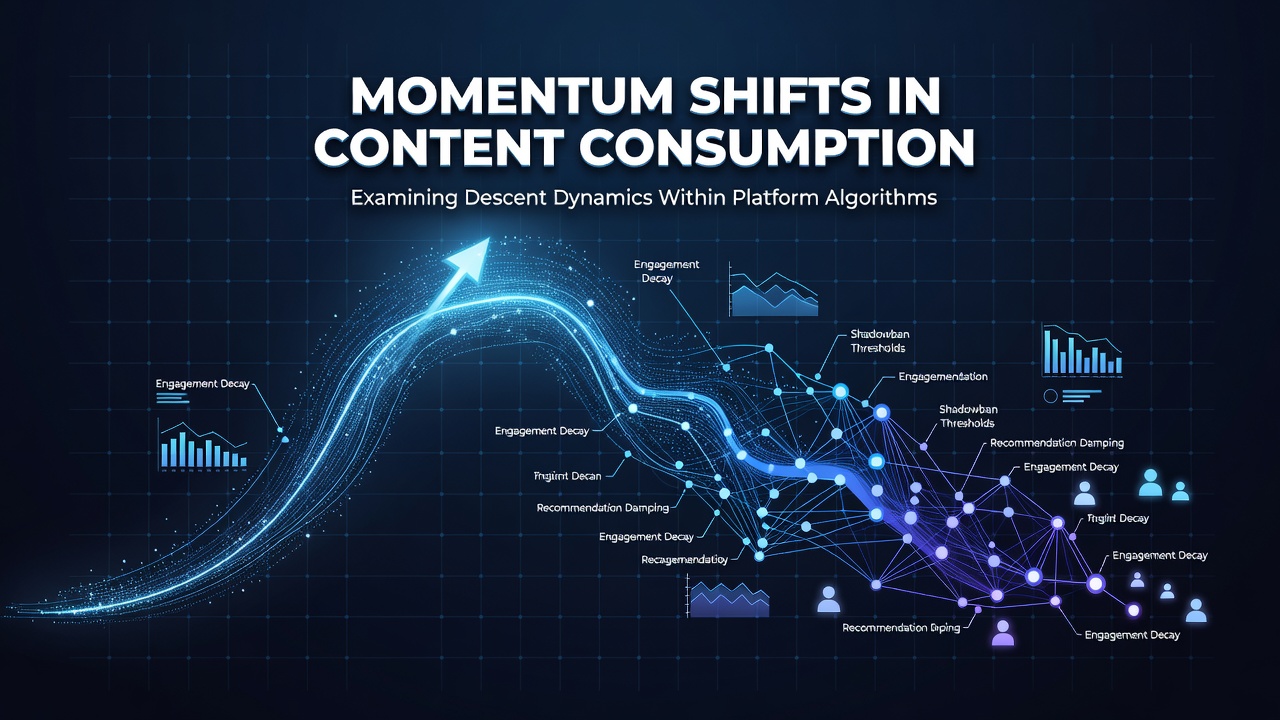
Platform algorithms manage the rise and fall of content visibility through structured descent dynamics that determine how material moves from prominent positions to lower reach zones, and observers note these processes shape consumption patterns across social networks, video services, and search interfaces in measurable ways. Data from October 2026 indicates that content items experience predictable velocity reductions after initial distribution peaks, with engagement metrics dropping in consistent intervals that researchers track through platform analytics dashboards.
Core Mechanisms Behind Content Descent
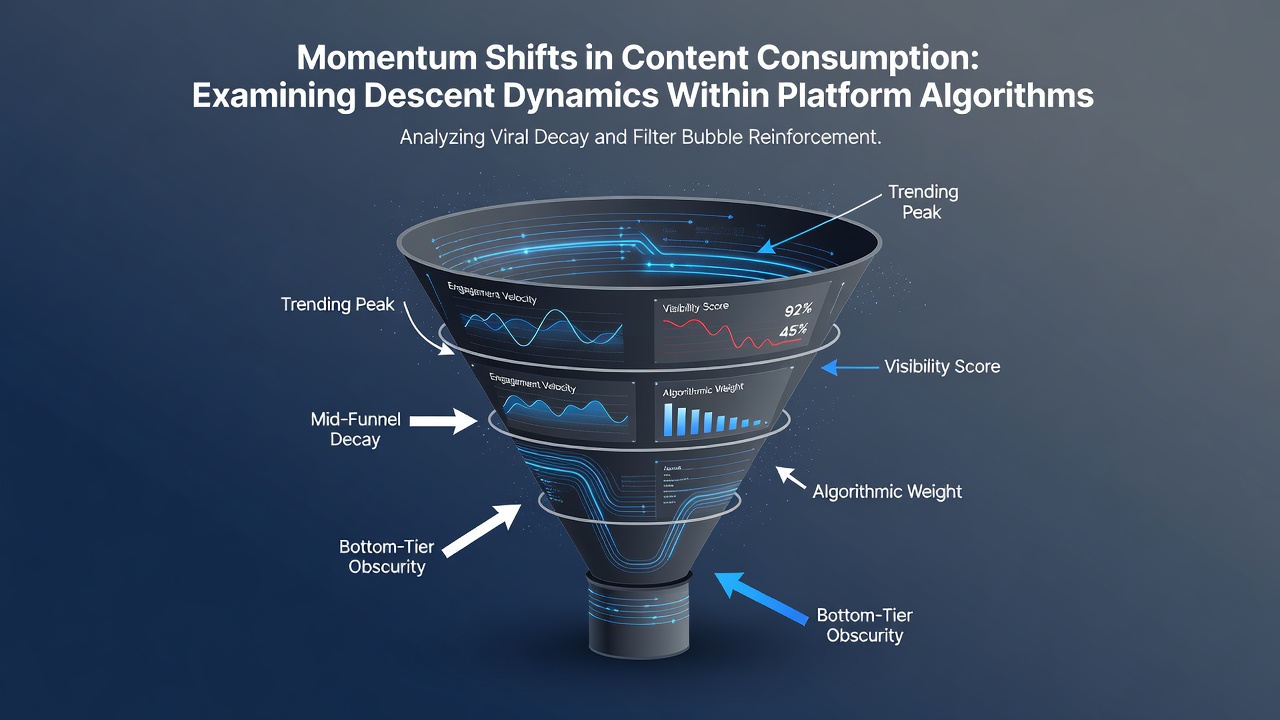
Algorithms evaluate signals such as dwell time, share velocity, and interaction density to assign momentum scores that decrease over successive hours or days, while those scores dictate placement adjustments that push older material toward secondary feeds or archive layers. Researchers at multiple institutions have documented how platforms apply decay functions to content rankings, and these functions incorporate time-based multipliers alongside user behavior data to recalculate visibility thresholds. One study revealed that a typical post loses approximately sixty percent of its initial reach within the first twelve hours when interaction rates fall below established benchmarks, and this pattern holds across major services that update their models quarterly.
Platform engineers adjust these parameters through iterative testing cycles, yet the underlying descent logic remains tied to engagement thresholds that trigger automatic demotion sequences. Figures from industry reports show that video content on short-form platforms descends faster than long-form articles because the systems prioritize freshness indicators more aggressively in high-volume environments.
Regional Data Patterns and Algorithm Variations
Analyses conducted across North American and European markets demonstrate that descent rates vary by content category, with news items dropping quicker than entertainment material due to timeliness weighting factors built into ranking systems. According to information published by the Australian Competition and Consumer Commission, digital platforms operating in the region recorded average visibility reductions of forty-five percent within forty-eight hours for user-generated posts during mid-2026 testing periods. Those patterns align with findings from Canadian regulatory reviews that examined similar decay timelines across comparable services.
Observers note that recommendation engines apply different descent curves depending on whether content originates from verified accounts or standard profiles, and this distinction creates measurable divergence in how material travels through user pathways. External signals such as external links or cross-platform mentions can temporarily slow descent, although the effect diminishes once algorithmic systems detect saturation in audience exposure.
Measurement Approaches Used by Analysts
Teams tracking these dynamics rely on longitudinal datasets that capture impression counts at regular intervals, and the resulting trajectories reveal how momentum shifts correlate with changes in user session lengths or device types. Academic papers published through 2026 highlight the role of machine learning classifiers that predict descent points based on early performance indicators, allowing platforms to allocate computational resources more efficiently during high-traffic windows. Those classifiers process billions of data points daily, and their outputs feed directly into ranking updates that determine secondary distribution phases.
Platform documentation outlines how negative feedback loops accelerate descent when users report content or scroll past items without pausing, and these loops operate alongside positive reinforcement mechanisms that boost material showing sustained interaction. Data shows that content categories with higher completion rates maintain elevated positions longer, whereas lower-completion items enter descent phases earlier in their lifecycle.
Impact on Distribution Ecosystems
Distribution partners and content creators adjust strategies based on observed descent timelines, and many now time their posting schedules to align with algorithm update windows that occur at predictable intervals. Research indicates that material published during peak activity periods experiences slower initial descent because higher baseline engagement buffers the effects of time-based decay multipliers. External research from the European Commission on digital platform operations confirms that these timing considerations influence overall reach metrics across multiple jurisdictions.
Systems also incorporate freshness signals from related content clusters, which means descent can accelerate or decelerate depending on surrounding material performance within the same topic area. Analysts track these cluster effects through network graphs that map how individual items influence neighboring visibility scores over extended periods.
Conclusion
Platform algorithms continue to refine descent dynamics through ongoing calibration of engagement signals and time-based factors, and the resulting momentum shifts determine the lifespan of content across digital ecosystems. October 2026 data illustrates consistent patterns in how visibility declines, with variations driven by content type, audience behavior, and regional regulatory frameworks. Those frameworks encourage transparency in ranking practices, which in turn supports more detailed examination of the mechanisms that govern content trajectories from initial distribution through final archive placement.